
The scientific benefits of power naps for stressed employees

Stress, fatigue, decreased productivity… Modern ailments don’t spare employees. Yet, a simple and accessible solution is gaining ground in innovative companies: the power nap. Demonstrated by numerous scientific studies, it’s an essential ally for employee wellbeing.
Discover its main benefits and why companies should integrate it into their workplace wellbeing strategy.
1. Improved concentration and productivity
The numbers speak for themselves: a NASA study demonstrated that a nap of just 25 minutes could improve performance by 34% and alertness by 54%. For employees working at a fast pace, a short, restorative break boosts focus and efficiency.
As early as the late 1990s, Japanese researchers observed the benefits of a 15- to 20-minute nap. Their work showed a significant improvement in alertness and performance after lunch (Takahashi, 1998; Kawasaki and Hayashi, 1999).
Fun fact: Did you know that the best time to nap is after lunch? Indeed, the word “nap” comes from the Latin word “sexta,” which refers to the sixth hour after waking. The word “nap” would therefore correspond to the period of sleep taken in the middle of the day, right after a meal.
2. Stress reduction
Chronic stress is the number one enemy of wellbeing at work. According to a study by the French National Institute for Sleep and Vigilance (INRS), more than 22% of employees report feeling stressed in their jobs. A power nap reduces cortisol levels, the stress hormone, acting as a natural balancer. By relaxing the nervous system, it helps employees gain perspective and better manage professional pressures.
3. A quick and effective energy boost
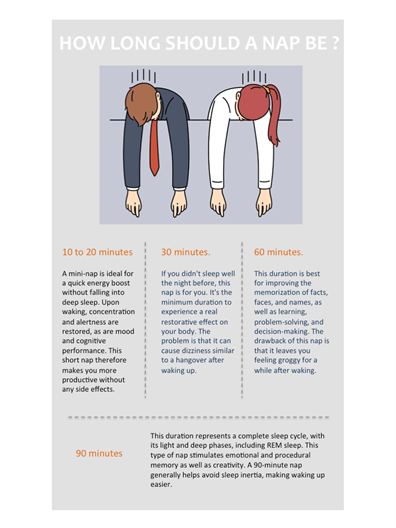
A power nap offers an energy boost without falling into deep sleep.
The trick? Set a timer to avoid the sluggish feeling associated with a longer nap and adjust the nap’s duration to your needs for a quick revitalization.
4. Positive Impact on Mental Health
By promoting relaxation, micro-naps prevent burnout and improve mood. They also play a valuable role in maintaining lasting emotional balance, particularly for those with disrupted circadian rhythms.
5. Reduced risk of cardiovascular events
The benefits of a regular nap go far beyond relaxation. A study presented at the Cardiology Congress reveals that a 30-minute nap can reduce systolic blood pressure by 2 mmHg, thus decreasing the risk of cardiovascular events by 10%.
Conclusion
Power naps are essential for the smooth operation of a business; they are an effective practice for improving quality of work life and strengthening employee engagement. Simple to implement, they are proving to be a key solution for more relaxed and productive employees.
Want to install a power nap space in your company or university ?